Introduction to Pool Filter Systems
A pool filter system is one of the most important parts of a clean, safe, and enjoyable swimming pool. While sanitiser helps control bacteria and algae, the filter removes the dirt, leaves, insects, pollen, body oils, and fine particles that make pool water look cloudy.
Choosing the right pool filter system can make pool maintenance easier, improve water clarity, reduce strain on your pool pump, and help you spend less time dealing with recurring water problems.
This guide explains how pool filter systems work, compares the three main pool filter types, helps you choose the right filter size, and covers the basics of pool filter maintenance.
Whether you own an above ground pool or an inground pool, understanding your filtration setup is the first step towards consistently clear water.
What is a pool filter system?
A pool filter system circulates pool water through a filter tank, where debris and particles are trapped before clean water returns to the pool.
Most pool filtration systems include:
A pool skimmer, which collects floating debris
A main drain, which draws water from the bottom of the pool
A pool pump, which moves water through the system
A filter, which traps dirt and particles
Plumbing and valves, which control water flow
Return jets, which send filtered water back into the pool
The pump and filter work together. The pump pulls water from the pool, pushes it through the filter, and returns cleaner water through the pool’s return fittings.
A filter does not replace chlorine, bromine, salt chlorination, or other sanitising methods. Instead, it supports water chemistry by physically removing contaminants that would otherwise remain in the water.
How do pool filter systems work?
The basic process is straightforward: Water enters the skimmer or main drain.
The pool pump pulls the water through the plumbing.
A pump basket catches larger debris, such as leaves and twigs.
Water enters the filter tank.
The filter media traps smaller debris and particles.
Filtered water returns to the pool through the return jets.
This cycle repeats while the pool pump is running.
A properly sized filtration system should circulate the total volume of pool water within an appropriate turnover period. Many residential pool systems are designed around an approximate eight-hour turnover, though the correct target can depend on local rules, pool conditions, bather load, temperature, and equipment specifications.
Why pool filtration matters
Without effective filtration, pool water can become cloudy, dirty, and harder to balance. The sanitiser may also need to work harder because there is more organic material in the water.
A reliable pool filter system helps: Remove visible dirt and debris
Improve water clarity
Reduce strain on pool chemicals
Support better circulation
Limit debris build-up
Make vacuuming easier
Reduce the risk of recurring cloudy water
Keep the pool more inviting for swimming
For homeowners, a good filter is not simply a convenience. It is a core part of keeping the pool usable throughout the swimming season.
Types of pool filter systems
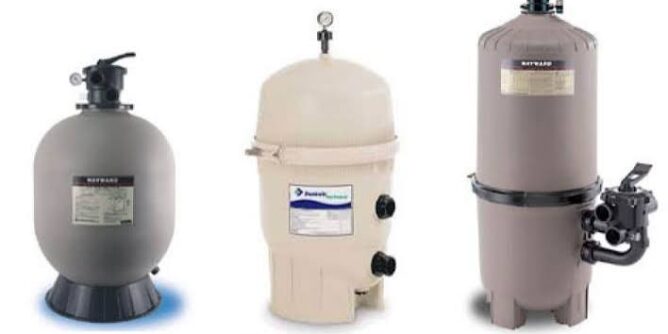
The three main types of pool filter systems are:Sand filters,Cartridge filters,Diatomaceous earth or DE, filters
Each type has different filtration performance, maintenance requirements, running costs, and ideal use cases.
Sand pool filter systems
Sand filters are among the most common and beginner-friendly pool filtration options. They use a tank filled with specially graded filter sand, or sometimes alternative filter media such as glass media, to trap debris as pool water passes through.
How a sand filter works
Water enters the tank and flows through the sand bed. Dirt and particles become trapped between the grains of sand, while cleaner water moves through the filter and returns to the pool.
Over time, the sand becomes loaded with debris. This raises the pressure shown on the filter gauge and reduces water flow. When that happens, the filter is cleaned by backwashing.
Backwashing reverses the water flow through the filter to flush trapped debris out through a waste line. Sand filters are commonly backwashed once the pressure rises around 8–10 PSI above the clean starting pressure, though you should always follow the instructions for your specific equipment.
Sand filter pros
Usually affordable to buy
Straightforward for beginners
Durable and reliable
Easy to backwash
Suitable for many above ground and inground pools
Sand or media does not need replacing frequently
Sand filter cons
Uses water during backwashing
Typically does not filter as finely as cartridge or DE systems
Can require regular backwashing during heavy use
May be less suitable where water conservation is a major priority
A sand filter is often a good choice if you want a simple, familiar system that is easy to operate and maintain
Cartridge pool filter systems
Cartridge filters use one or more pleated filter cartridges made from polyester-like material. Water flows through the pleats, which trap dirt and fine debris.
Cartridge filters are widely used for above ground pools, smaller inground pools, spas, and energy-efficient variable-speed pump setups.
How a cartridge pool filter works
Instead of backwashing, you remove the cartridge and rinse it with a garden hose. When the cartridge becomes heavily soiled, it may need a deeper clean using a suitable cartridge cleaner.
Cartridge filters can capture relatively fine particles, often in the range of approximately 10–20 microns depending on the filter design and operating conditions.
Cartridge filter pros
Does not need backwashing
Saves water compared with a backwashed filter
Provides effective filtration
Often simple to clean
Good choice for smaller equipment pads
Can work well with lower-flow variable-speed pumps
Cartridge filter cons
Cartridges need manual rinsing
Replacement cartridges add an ongoing cost
Cleaning can be time-consuming
Cartridges can become damaged if handled roughly
Heavy debris loads may require more frequent cleaning
Cartridge systems are especially attractive for pool owners who want to conserve water and do not want to backwash regularly.
DE pool filter systems
DE filters use diatomaceous earth, a fine powder made from fossilised microscopic aquatic organisms. The powder coats internal grids or filter elements and creates a very fine filtration layer.
Many pool owners choose DE filters when they want exceptionally clear water and are willing to accept more involved maintenance.
How a DE pool filter works
Water passes through grids coated in DE powder. The DE captures extremely small particles, producing very polished-looking water when the system is correctly maintained.
After backwashing a DE filter, fresh DE powder must be added according to the manufacturer’s instructions. The amount varies by filter model, so always use your equipment manual rather than guessing.
DE filter pros
Very fine filtration
Excellent water clarity
Can capture much smaller particles than many other systems
A strong option for pools with recurring fine debris
Popular for owners who prioritise polished water appearance
DE filter cons
More complicated maintenance
DE powder must be handled carefully
Requires recharging with fresh DE after backwashing
May require more detailed seasonal cleaning
Disposal requirements may apply in your location
DE filters can be excellent performers, but they are generally best for owners who are comfortable following maintenance instructions closely.
Sand vs cartridge vs DE pool filters
Feature Sand filter Cartridge filter DE filter
Filtration level Good Very good Excellent
Typical maintenance Backwash periodically Remove and rinse cartridges Backwash, recharge DE and deep-clean
Water use Higher due to backwashing Low Moderate due to backwashing
Ease for beginners Very easy Easy Moderate
Ongoing replacement costs Low to moderate Cartridge replacements needed DE powder and possible grid maintenance
Best for Simple, reliable filtration Water-conscious owners and efficient systems Owners wanting very clear water
There is no single “best” pool filter type for every pool. The right choice depends on your pool size, pump flow rate, budget, water availability, maintenance preferences, and desired water clarity.
What size pool filter do I need?
Correct sizing is one of the most important parts of choosing a pool filter system. An undersized filter can clog quickly, create high pressure, reduce circulation, and make water care more difficult.
To size a filter, start with:
Pool volume in gallons
Desired turnover time
Required flow rate in gallons per minute
Pump flow rate
Filter’s maximum flow rate
Plumbing size and equipment compatibility
A common turnover calculation is:
Required GPM
=
Pool volume in gallons
Turnover hours×60
Required GPM= Turnover hours×60
Pool volume in gallons
For example, a 20,000-gallon pool with an eight-hour turnover target requires=41.7 GPM
That means the circulation system should be capable of moving approximately 42 gallons per minute under real operating conditions. The filter should be rated to handle at least the pump’s actual flow rate; a filter that is larger than necessary is generally preferable to an undersized one.
A practical sizing rule
Do not choose a filter based only on the advertised horsepower of the pump. Pump horsepower alone does not reveal the real flow rate through your plumbing system.
Instead:
Calculate your pool volume
Determine a realistic turnover target
Check your pump’s flow curve
Compare the pump’s expected flow against the filter’s rated maximum flow
Allow capacity rather than choosing the smallest possible filter
Confirm compatibility with your pool installer, retailer, or manufacturer if unsure
For cartridge filters, some pool professionals use a starting guideline of approximately 100 square feet of filter area per 10,000 gallons of pool water, although individual equipment specifications should always take priority.
Pool filter maintenance basics
Every pool filter needs regular maintenance. The exact process differs by filter type, but the goal is always the same: keep water flowing freely and remove trapped debris before it compromises performance.
Check the pressure gauge
When your filter is clean, note the normal starting pressure shown on the gauge. This becomes your baseline.
As debris accumulates, pressure rises. A common recommendation is to clean or backwash when pressure is roughly 8–10 PSI above the clean starting pressure. Check your filter manual, as specific guidance can vary by manufacturer.
Keep baskets clear
Empty the skimmer basket and pump basket regularly, especially during leaf season or after storms. A clogged basket can restrict water flow and put unnecessary strain on the pump.
Clean based on pressure and flow Do not clean a filter simply because it is a certain day of the month. A small amount of trapped debris can improve filtration efficiency, while over-cleaning may waste water or reduce filtering performance.
Instead, look for:
Pressure rise above the clean baseline
Weak return-jet flow
Cloudy water
A visibly dirty cartridge
Difficulty maintaining circulation
Increased pump noise or air in the system
Follow safety basics
Before opening a filter tank or moving a multiport valve:
Turn off power to the pump
Relieve pressure through the air-relief valve
Follow the manufacturer’s instructions
Never change valve positions while the pump is running
Replace damaged gauges, O-rings, clamps, and seals promptly
Pool equipment operates under pressure. If you are unsure about a repair, use a qualified pool technician.
How to choose the best pool filter system
When comparing pool filter systems, use the following checklist.
Choose a sand filter if:
You want a straightforward system,
You prefer quick backwashing,You have plenty of water available for backwashing,You want a durable, budget-friendly option,You value simple maintenance over the finest possible filtration,
Choose a cartridge filter if:
You want to conserve water,You do not want a backwash line,You have an above ground pool or smaller inground pool,You are comfortable rinsing cartridges manually,You use a variable-speed pump and prefer efficient operation.
Choose a DE filter if:
Water clarity is your highest priority,You are comfortable with more detailed maintenance,You do not mind using and replacing DE powder,You are prepared to follow disposal rules in your area,You want fine filtration for persistent small particles.
For most homeowners, the best pool filter system is not automatically the most expensive one. It is the system that is correctly sized, compatible with the pump, realistic for your maintenance routine, and suitable for your pool type.
Frequently asked questions
What are the three types of pool filter systems?
The three main types are sand filters, cartridge filters, and diatomaceous earth (DE) filters. Sand filters are simple and durable, cartridge filters conserve water, and DE filters provide very fine filtration.
Which pool filter system is best?
The best pool filter system depends on your priorities. Sand filters are often easiest for beginners, cartridge filters are water-efficient, and DE filters can provide the clearest water. Correct sizing and regular maintenance matter as much as filter type.
How often should I clean my pool filter?
Clean the filter when the pressure gauge rises roughly 8–10 PSI above its clean starting pressure, or when water flow noticeably drops. Cartridge filters should be removed and rinsed; sand and DE filters are generally backwashed. Always check your manufacturer’s manual.
How do I know if my pool filter is too small?
An undersized filter may clog frequently, show high pressure soon after cleaning, struggle to maintain clear water, and reduce circulation. A correctly sized filter should handle your pump’s expected flow rate and your pool’s required turnover.
Can I use a larger pool filter than I need?
In many cases, yes. A larger filter can provide more filtration area, longer periods between cleaning, and lower resistance to water flow. However, it must still be compatible with your pump, plumbing, and available equipment-pad space.
Does a pool filter remove algae?
A pool filter can remove dead algae and some suspended particles, but it does not solve an active algae problem by itself. You also need correct water chemistry, brushing, circulation, and an appropriate sanitising or shock treatment plan.
Should I run my pool filter every day?
Most pools need daily circulation during the swimming season. The exact run time depends on pool size, pump speed, water temperature, bather load, weather, and equipment design. Many systems are planned around an approximate eight-hour turnover, but always use local guidance and your equipment manufacturer’s recommendations.
Why is my pool filter pressure high?
High filter pressure usually means the filter is dirty or water flow is restricted. Clean or backwash the filter if it is above its normal pressure range. If pressure stays high after cleaning, inspect valves, return lines, filter media, and equipment for blockages or faults.
Can I switch from a sand filter to a cartridge filter?
Yes, in many cases, but you need to check pump flow rate, plumbing, filter size, electrical requirements, available space, and whether your existing system has a backwash line. A pool professional can confirm whether the replacement is correctly matched.
Build your pool filter knowledge
A dependable pool filter system makes every other part of pool ownership easier. When the filter is correctly sized and maintained, water stays clearer, circulation improves, and you can spend more time enjoying the pool instead of fixing preventable problems.
Start by identifying your current filter type, recording its clean pressure, checking your pool volume and pump flow rate, and creating a simple maintenance routine. From there, explore the detailed guides on sand filters, cartridge filters, DE filters, filter sizing, cleaning, and troubleshooting across PoolFilterSystems.com.
