Prevent algae buildup
Posted in Pool Maintenance

Rain Making Your Above Ground Pool Green? How to Fix This

https://www.youtube.com/watch?v=JDoqA1WWsw0

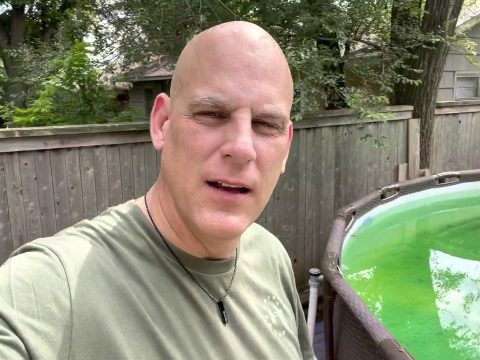
Hello, gentle peeps, so it’s been raining constantly here for about a week and a half, and I’m fixing to have to clean this see. This will happen. It rains every single day and you can’t get out here to clean.

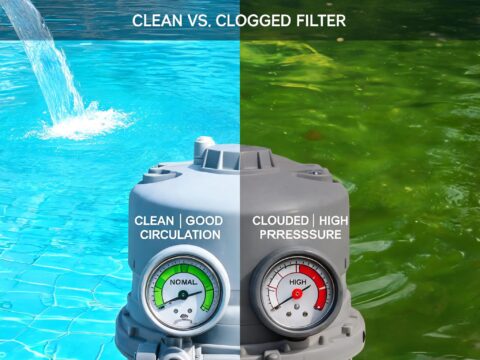
You start getting the algae buildup and getting that yuckiness going on. So what I’ve done is, I’ve started to backwash first to clean my filter, because it has been running – and I cleaned out the little trash out here every day, but I’ve got to do a good and back floor.

Water’s a little high. Then we’ll do some cleanup we got to do some some chlorine and different things to get this thing back to normal. Looking good, it’s fourth of July kinda, nice at the pool this evening.

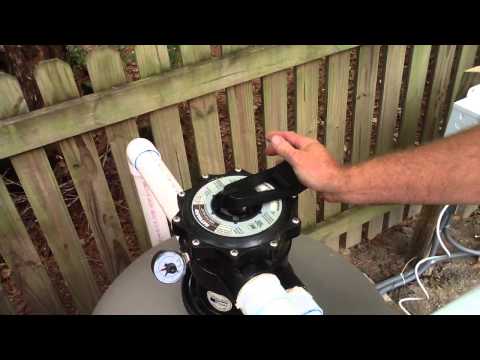
So we’ll see how it looks. Thanks for watching, when you’re doing the backwash excuse the mess and I think it’s been raining. Make sure that you have this set on backwash, that’s open. This is oh, this is open.

It’s running in here everything’s running through. It’s set on backwash and it’s running out and once that water gets pretty clear, then you can do a switch. So what you do is you stop, and you want to set it over to rinse and what that’s going to do is it’s going to rinse out all the sand? It’s in there. It’s going to rinse all the dirt and stuff and set the sand back and get ready. So let the water come back out of here and it should get a little bit dirty and then get clear again.

So you want to have that set also. Okay, neither one of them take too long, back washing that don’t take too long. But what I do is I go ahead and close it up that way. I can take off this with a back wash with clink coming through for my drain area that comes off here and then put this back on good and snug a hand tie and set this back to filter.

Now I want to run, you should be getting some good pressure. Come back out your outlet pulling back through your bucket here and then I want to add some liquid chlorine. What I use is this chlorinating pool essentials.

Liquid chlorine kills algae bacteria. It’s, good for saltwater metal systems, calcium free. I use about half a gallon when I do the pool and let it sit good all right. So I poured about a half a gallon in there where the outtake comes out and let it go now.

I’m gonna let it circulate the pool. I’m gonna give it a brush here, and I’m gonna give a good scrubbing of my of all my edges and we’ll come back and see how it looks once it’s gone through the cycle a little bit, okay after you get and a little while a couple hours later it’s blue again.

Now I still need to be vacuumed and still have to check all the balances and do a little bit more. But you can tell a huge difference just from that backwash chlorinating and then brushing and doing a quick cleanup of the pool anyway, thanks for watching. Appreciate it,

Source : Youtube

Service pool pump
Posted in Pool Maintenance

How to Service Your Pool Pump and Backwash Your Filter

Service your pool pump and backwash your filter

This is a video reference on how to service your pool pump and backwash your filter.

Service the basket

First step is to kill the power to the pump motor and being this pool is set up as flooded suction and flooded suction is below pool level with the filtration system,then we need to shut off all our valves. So we would just shut them off at 3:00 and 9:00 across the pipe, that’s all. Take your leverage tool, place it on your pump lid, give it a tap. Remove your basket, give it a tap. Empty the basket. That’s clean. Place the basket back into the pump. It can only go one way. It won’t allow you to do it any way but the right way and that’s to the hole to the front of the pump. Place the basket in.

Once again make sure this o-ring is sitting in its seat. Place the lid back onc the pump. Snug it.Come back over, make sure your return valve’s open, make sure your skimmer main drain is open, make sure your skimmer valve is open. Now that we’ve serviced the pump basket it’s time to backwash the filter.

Service the pump

With the pump still off we will take the variable flow valve, press down on the handle, rotate it 180 to backwash. Once we’ve locked it into the backwash position we’ve come over here to the power source and set your pump on. What we’re doing in this cycle is we’re taking the water and we’re reversing the flow of water coming in the bottom of the tank come on to the sand picking up the dirt and kicking it out the waste line. Typically this takes about 40 to 60 seconds to do. The water will start off clear then it’ll cloudy up or even dirty up and then once it clears up for the second time you’re done.

So we’ve gone through the cycle. Here we will kill the power. Come back over to the variable flow valve press down on the handle put it in the rinse cycle. Power back on. Basically we want to do this for five seconds. What the rinse cycle does is force the sand to lay back down on the sand bed so we won’t have any blowback into the pool. After the rinse cycle kill your power. Pump into filter, rather variable flow valve into filter. It’s locked in. Power on. Come over here make sure we are showing pressure on the gauge. Right now we have the black operating needle showing clean. Green is clean. When that black needle hits the red it will indicate that it’s time to backwash again.

Pool filters

That’s just a quick video reference on how to backwash your pool

Pentair Quad DE Pool Filter
Posted in Pool Maintenance

How to Clean a Pentair Quad DE Pool Filter

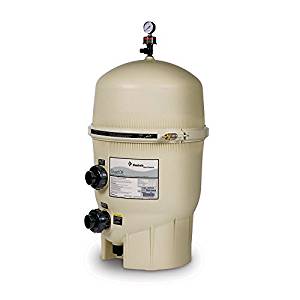
Today I’m going show you how to clean one of my favorite filters: the Pentair Quad D. E. diatomaceous earth filter.

The first thing we want to do is make sure that the pump is off and it stays off. We’ve got a Pentair variable speed pump. I’ll open the little pump door and show you how to turn it off. To put it in STOPPED Mode, I’m going to push the Start/ Stop button and you can see that it says Stopped. The pump will not turn back on. Whenever we clean a filter we always want to open the air bleed to relieve any pressure. On this filter its just a simple turn. You may be able to hear the air relieving itself. Now its OK to open.

[azon_inpost asin=”B004VU8UHK” tpl=”tpl_4″]Pentair 188592 Quad D.E. Cartridge Style D.E. Pool Filter, 60 Square Foot, 120 GPM[/azon_inpost]

I want to pull the manifold off the top- just kind of wiggle it and it pulls right off. That’s the air relief/ bleed screen. You can hose that off or just rinse it off in the pool. You don’t have to drain this filter, it’s nice if you can. If there are two things about this filter I wish that Pentair would improve, “Are you listening Pentair?”I wish they made this filter in black to match their other line of pumps and, the drain is in an awkward spot. I’ll show you where. As you can see, the drain plug is in a really awkward spot and its DIFFICULT to get to. Well, it doesn’t help when you tighten it! Its hard to tell which way to turn when its upside down. And once I get it I can open it and the water will spill out. I feel like I’m doing yoga right now. . . Now that the tank is drained, you just wiggle and pull the four elements out. These look much like paper elements but they’re not, they’re made out of polyester or nylon. They are a much heavy duty material but you HAVE TO MAKE SURE THAT YOU RECHARGE the FILTER with new diatomaceous earth, or, if you run straight dirty water through this you will ruin the these very quickly.

[azon_inpost asin=”B004VU8N6I” tpl=”tpl_4″]Pentair 178655 Cartridge Replacement Quad 80 Pool and Spa D.E. Filter[/azon_inpost]

Do you want to take a look in the bottom of the tank? And that’s what the tank looks like. So I found a nice place in the yard to clean the filters. There are SEVERAL things I like about the Quad D. E. filter: 1) it filters more fine particulate out than a regular paper cartridge filter 2) and from a service guy’s perspective, its SO EASY to clean. The pleats are much further apart so it doesn’t take as long to clean it, you don’t get as wet and its an easier clean up. Also, I use a DE alternative when I recharge the filter. I’ll show that when we recharge it (later in the video) but it makes less of a mess and its organic so that you don’t get diatomaceous earth, traditional diatomaceous earth that tends to leave white marks (residue) in the yard. I’ll go about cleaning it now. I think it took less than 2 minutes to clean that element and this backyard doesn’t even have very good water pressure on the hose. You could literally clean these out almost spotless in less than 15 minutes. You can’t do that with a large paper filter. That’s pretty clean! Can you see how easy the dirt comes out of here because its coated with diatomaceous earth? The diatomaceous earth is the filtration media which captures the dirt and coats the filter and it just comes out with very little water pressure. Its great. Four filters cleaned up pretty quickly- very easy to do. Now, let’s put them back together and we will recharge the filter. I’m back at the filter ready to put it back together. One of the things you always want to do is take off the o-ring. I always go dunk it in the pool just to get any grit or dirt off of it. Then you want to make sure that the groove that it sits in is nice and clean. This is a mistake that many people make when they don’t take the o-ring off and a little bit of DE or dirt builds up around it and when they put the clamp on the filter leaks. You can just hose it off or, just pour a little water on it and run your finger around it and it’s ready to go. If you look inside the filter you can see what it looks like after I’ve hosed it out and it’s all nice and clean. Put the bottom manifold back on, it just sits there. And now, I can put the elements back in. What I didn’t mention, another thing I love about this filter is they are so light even when they’re full of dirt, they are a lot lighter, a lot lighter than dirty paper cartridge elements.

[azon_inpost asin=”B004VU8RXW” tpl=”tpl_4″]Pentair 178578 Almond Bottom Tank Assembly Replacement Pool and Spa Filter[/azon_inpost]

This is especially helpful for people who don’t have a lot of strength- maybe the elderly if you still have to clean your own filter. So, you can pick these up pretty easily and just set it in there. By the way, there’s no right-side-up. either way it goes in. I put my little screen on that’s been cleaned. Those just tap in place. . . . and my o-ring. Make sure there is nothing on this o-ring. And, I don’t believe in lubing the o-ring. I know a lot of retail stores will tell you they like to lube the o-ring. To me, it’s great for about a month and it’s nice and slippery and then the lube turns to glue and then it attracts dirt and it’s a big mess. When you need a new o-ring every couple years, just buy a new one, I am not a lube guy. The tank goes on any way you want. I always try to do it so the when the gauge is closed that it’s facing where you can see it well. Just set it on there. The clamp goes on either way. I’m a rightie so I like to put it on for me being right-handed. When I took it off it was left-handed and I don’t (personally) like it that way. It doesn’t matter which position the band goes in and the bolt. You can put it anywhere you want. I like to put it out of the way so I don’t catch my clothes on it or run into the bolt. So this is how we assemble it: little washer- and I’m detailing this because SO many people put this together incorrectly, we find it ALL the time. Spring, then I’ve got my nut, my washer and it slips inside and I tighten it. Now, most things on a pool equipment set you just want to hand-tighten, except the filter because its under pressure we really want to tighten it down pretty well. When it (the pump) turns on it will stretch it a little bit and it will loosen the band so I always like to tap it a few times to help seat it. You can use a rubber mallet, a rock, your socket, what have you, I’m using my socket today so I’m using it. After you tap it you’ll feel its loosening up a bit and you can crank it down a little bit more. That’s pretty good. You don’t have to go crazy tight as some people do (Scott!) but good-n-tight. And then, we have to put this. . . drain plug back on. . . PENTAIR, ARE YOU LISTENING? Black filter. . . drain plug in a different spot. PLEEEAASE?? Maybe on the side? You don’t want to go too tight here. Just snug because it is plastic. I always tend to go a little looser than tighter that way I don’t over-tighten it and crack it.

[azon_inpost asin=”B004W4TQJ6″ tpl=”tpl_4″]Pentair 190058 Pressure Gauge Replacement Pool/Spa Valve and Filter[/azon_inpost]

Worst case scenario it leaks a little bit and I can always give it another half-turn with my channel-locks. Let’s turn it (the pump) on and might as well do it right now and we’ll bleed the air out. I’ll turn the pump on. The variable speed pump will start up. We’ll wait for the water to fill up the tank. If you can picture this, there’s air in the tank and water is filling the tank up and as it fills it up it’s blowing the air out of the air relief. Once water comes out I’ll shut it (the air relief valve) off. Let’s go charge this thing up!Its time to charge the filter. You want to do this withing 5 minutes of bleeding the air out of the filter. You don’t want to wait too long because dirt is accumulating on those filters. I like to use the DE alternative called Aqua Perl.

There are several different brands. This is the one I prefer. As I said, you can wash it down the gutter- I don’t recommend that but it’s not illegal to do so (in my county)like it is diatomaceous earth and it cleans up well in the yard and goes away quickly. So this is a Quad 80 filter, not the Quad 60 that my cameraman told me!It’s a Quad 80 so it requires 8 one pound scoops of diatomaceous earth. Some people still use coffee cans and try to do the calculations. . . why bother?! Get yourself an orange pre-measured DE scoop. It might be $5, $10? It will last a long, long time and there’s no calculations. One of these is 1 pound. You don’t have to add all eight scoops at once. You can divide it up depending on how big your bucket is. And you don’t have to be perfect with the scoops.

[azon_inpost asin=”B004W4NH9Q” tpl=”tpl_4″]Pentair 178654 Cartridge Replacement Quad 60 Pool and Spa D.E. Filter[/azon_inpost]

You don’t have to pack it in. And this is very, very important: you want to mix the diatomaceous earth into a slurry-trust me, I’ve tried it on my own pool. You would think that by just pouring it into the skimmer that it would mix itself up on the (way to) the filter, it doesn’t. It will clumpy and actually find dry spots on your filter six months later when you clean it. What we’re going to now is we’re going to make a slurry just by stirring it with our hand or with a stick. You want to do so until all the lumps are out. Its very easy to tell. Once you do that, you slowly pour it into the skimmer. The pump will suck it through and then it will coat the filter. Four, five, six, seven, eight. . . Some people recommend wearing a mask when you’re doing this, it certainly wouldn’t hurt. I don’t unless it’s a windy day. Today the wind is pretty calm so it’s not blowing around but you definitely don’t want to stick you’re face in there and breathe it or snort it in. Another thing I love about this filter: with all the residue DE that may spill, you can always just wash it off into the pool or off of the deck. Any extra D. E. that goes in the pool is eventually going to be filtered through the system and its going to be trapped by the filter and help coat the filter. Now I have a nice clean work area. That’s it!That’s how you clean the Pentair Quad Diatomaceous Earth filter. Hopefully by the time you watch this, this filter will be available in black and the drain plug will be in a better position!This is a superior filter. I hope enjoy it on your pool. Thanks for watching, I’m Mike the Pool man.

indoor swimming pool
Posted in Pool Maintenance

How Much Pee is in Your Swimming Pool?

Now that summer is winding down and you’ve already spent lots of time in the water,I want to show you now how to figure out how much pee is in any pool. There’s actually a lot of misinformation on the topic of pee and pools, so I’m gonna do some experiments on my own along with some clever science people in foreign lands and spoiler alert: some of the results are good news and some aren’t, so let’s jump right in.

So this first experiment is to determine how much pee is in an actual sample of pool water using an ingenious method. So I got two samples from my friend’s community pool, where lots of people swim. One from the pool and one from the spa, and then two samples from a friend’s backyard, again one from the pool and one from the spa. I also collected samples from the source water at each location as a control and I’ll explain why in a minute. Now that I have my samples I needed to quickly get to my scientist friend Lindsay in Canada, but lucky for me—-I knew a shortcut.

We are now in the lab of the University of Alberta, and this is Lindsay Blackstock and she is basically a genius. So you are going to help me determine how much pee is in these samples, because we know people pee in the pool. Yes, we have strong evidence that people do pee in the pool. So we’re going to try to find a way that we can measure that pee without actually measuring pee. I’m going to apply my new strategy based on the amount of artificial sweetener that’s in the pool. We know artificial sweeteners don’t come from anywhere except for urine, so that’s the only logical source for them if we find them in the pool,and we know how much artificial sweetener is in the average person’s pee and then using that we can estimate how much pee is in the pool, so we’re going to take this sample,we’re going to bring it over to our sample prep bench, we’re going to filter it, transfer it into some special vials Into this instrument, which is a liquid chromatography system, so this instrument is going to concentrate our sample before it passes it on over to the second instrument,which is a mass spectrometer and the mass spectrometer is able to detect the individual little artificial sweetener molecules one by one. Love it, let’s get to work!

Bring it on over there. Before we run the samples let me explain why I find Lindsay the scientist’s solutions, so brilliant. You can actually take a sample of pool water and directly measure the amount of urea in there,but the problem with that is humans also excrete urea through things like sweat,which is also very common in a pool, so you can’t tell how much of that urea actually came from pee. To get around that she looked at the amount of a certain artificial sweetener in the sample called Acesulfame Potassium, which is really common in food products such as these–oh, and also all of these. So pretty much everything. The reason drinks like these are zero calories is because you taste the Acesulfame Potassium sweetener,but the chemical compounds aren’t broken down at all by your body so more than 99 percent is passed through in your pee,within 24 hours. And therefore the only reason this would be in the pool is if it passed through a person first. And just to be sure you measure the source water at both locations because sometimes trace amounts of the sweetener can be found in the water supply if so we just subtract that from the results.

I love this because we’ve all wondered how much pee is in a specific pool? But Lindsay figured out a really clever way to use proven science to actually answer the question. The mass spectrometer takes about an hour to get results,So while we were waiting,Lindsay told me something that really surprised me. Chlorine in pools is obviously really helpful because it breaks down harmful bacteria,viruses, and microbes that would be harmful or even potentially deadly to humans. However, there is one big downside and that is, it reacts with urine to create a byproduct called trichloramine. So trichloramine is what’s responsible for that chlorine smell that you might get when you enter into an indoor swimming facility It’s also- but if you smell chlorine like straight out the bottle, it has that chlorine smell. Yeah, but but the smell that you smell in a pool is trichloramine, like this is the compound responsible for that characteristic swimming pool smell- if I look skeptical here it’s only because I was; so I devised an experiment of my own to see if this is really true.

For the experiment I got two five-gallon buckets and filled them with pure water,then I added four times the recommended concentration of chlorine for that volume of water to both buckets,and then only in the bucket labeled BI added just a little bit of pee, and I let it sit for a couple days. Alright, so it’s been three days,so this is the moment of truth.  So the first thing I notice is visually, they look the same. You can’t tell one bucket from the other as far as color of water goes. So I’m gonna start and smell this one first. Mmm, so that doesn’t smell like anything, that smells just like water even though this has four times the recommended concentration of chlorine for this volume which makes me nervous to smell this one. What?That is crazy!This smells like a pool even though the only difference between these two is this has a little bit of pee in it. This is a nostalgic smell this smells like summers and vacationing at hotels of pools and water parks,Turns out it was just pee.

So in if trichloramine which again is what is produced when pee reacts with chlorine,was just that classic pool smell that’s not that big of a deal,but the problem is it’s kind of bad news for both your lungs and your eyes. When your eyes are really red after swimming for a while, that’s actually because of the trichloramine from the pee, not the chlorine. Trichloramine also causes things like asthma. In fact studies show asthma is more likely to occur among elite swimmers, than any other high-level athlete, which now makes sense because Michael Phelps admitted to always peeing in the pool, and he says all his buddies do too. So be cool, and don’t pee in the pool. Now let’s go see Lindsay’s results. In Lindsay’s research. She sampled 20 public swimming pools and 10 public hot tubs. The average concentration of sweetener for the pools was 470 nanograms per liter and for the hot tubs was 2,247.

So after running all of my samples we found that here in my friend’s backyard pool,they had a concentration of artificial sweetener of 69 nano grams per liter which equates to just under a gallon of pee. Which is actually much lower than the average,but that makes sense because this would see much less use than a public pool. Their spa had a higher concentration in the pool at103 but since the spa contains much less volume,That equates to about this much pee. So far not bad, and then in this public community pool. We had 27 nano grams per liter of artificial sweetener concentration which for this volume is again a little bit less than a gallon and the spa is higher at a concentration of335 which is about this much for the volume of spa so the concentration of artificial sweetener in this pool and spa is much much lower than the averages Lindsay saw in the 30 samples she collected, which leads me to believe that the water has been completely replaced recently which happens from time to time for various reasons. If this pool has the average concentrations reported by Lindsay, for these volumes we would expect to see over a gallon of pee in the hot tub and about13 gallons in the pool. If you want an estimate of the pee in your own pool, I came up with a simple equation after talking with professor Ernest Blatchley of Purdue University,who mentioned that studies have found that swimmers introduced between 25 and 80 milliliters of urine per swim session. So you take the average number of swimmers that were in your pool per day during the summer, and then you multiply that by 1. 2.

That’s how many gallons of pee are in your pool at the end of the summer and if you think your friends and neighbors pee more than average use 2 as the multiplier and if you think they are more on the courteous side of the range,use 1/2 as the multiplier. As a general rule of thumb, though public pools about this size will contain approximately 13 gallons of pee and Olympic pools will contain- brace yourself – over 130 Gallons. There are some caveats to these generalizations so check out the links in the video description for published papers for both scientists Lindsay and professor Blatchley.

So in conclusion, what does this all mean? Like is this something to be grossed out about? For starters let me just say pee is generally considered to be sterile meaning it’s free from bacteria and any living things. You can totally drink this stuff and not get sick. In fact in some cultures that’s totally a thing. “You drink the grandsons pee, and it’s going to help you”additionally urine is made of 95% water and just 5% of dissolved solids like the urea stuff we’ve been talking about. The fact that pee is so diluted at 95% pure water is in part, disappointingly why it’s really hard to make a chemical you could add to any pool that will magically turn blue if someone pees in it. Having said that I suppose it’s still a little gross knowing you’re swimming in even just a small amount of pee, but I feel all the benefits to your happiness and well-being that can come from swimming, far outweigh any sort of gross factor or minor health risks. I guess at the end of the day my advice would be to be cool and don’t pee in the pool and then at that point-Just keep swimming, just keep swimming, just keep swimming swimming swimming. Just maybe take a shower when you’re done. Speaking of swimming pools, did you know your heart pumps enough blood to fill 4 Olympic sized swimming pools every year, or how about that there’s a hundred lightning strikes on Earth every second, or did you know that it’s so hard or something become a fossil that if all humans currently living right now suddenly went extinct we would only leave behind 8skeletons as fossils somewhere buried in the Earth.

Now if you would have listened to “A Short History of Nearly Everything” on Audible like me, you would have known all of that. This book is a really entertaining synopsis of all the stuff that we know about science, including when and how we learned it. In addition to talking about all the stuff we don’t have answers for you. I really liked it and it’s a big book. But if you use audible and listen to 1. 25 speed like I do while your commuting to and from work,you could knock this out in a little over week. So if you wanna listen to a short history of nearly everything or any other audio book for free, all you have to do is use the link in the description, or go to audible. com/MarkRober. Thanks for watching!”Just keep swimming, just keep swimming swimming swimming”

Haywards Pumps and Filters are more energy efficient
Posted in Pool Maintenance

Make Your Swimming Pool More Energy Efficient

Make Your Swimming Pool More Energy Efficient

Welcome to another in a series of training videos how to make an existing pool more energy-efficient. So there are many things for you to do to an existing pool and its equipment to make the foot print more energy efficient. We are going to now explore those options.
[WPXperVideo id=14]
There are three ways to make existing swimming pools more energy-efficient. The first is to increase the hydraulic efficiency of the pool system which causes lower head loss leading to the smallest pump or lowest rpm necessary. Second is to reduce the RPM of the motor by using variable or multi-speed motors. The third is to replace electrical items on the pool with more energy-efficient models.

Increase Hydraulic Efficiency

Let’s start with the ways you can increase the hydraulic efficiency of the pool system. So one way is to increase the size of the return eyeball fittings. Having small eyeball fittings installed on the pool returns give a false impression flow by showing movement via water pressure. Put a larger eyeball on the return giving you more flow with less back pressure. Shown here our eyeballs sizes 3/8 through one inch. Using a small eyeball is like putting a pressure nozzle on the end of the hose. Thus giving you less flow with more pressure.

Replace Older Filters

Older filters should be replaced with more flow efficient cartridge filters as shown here with the de-filter backwash valve add a substantial amount of head loss which reduce flow. Cartridge filters do not need a backwash valve to reduce head loss and increase flow. High head loss ninety degree elbows in the plumbing system can be replaced with more efficient double forty fives. As a result even more efficient sweeps by re-plumbing to remove any and unnecessary fittings from the system will also help. Soas shown here most state-of-the-art equipment comes with union connecting fittings that allow for 2 inch or 2. 5 inch pipe.

Increase Pipe Size

Plumbing a system in the largest and most efficient pipe will reduce head loss and increase flow. So  increasing the pipe size to 2 or 2. 5 inch or even larger to make sure the pump is getting all the water it needs. The suction side the pump should have a manifold that builds in size to accommodate the flow coming from multiple suction points. We have talked about those things we can do to improve the hydraulic efficiency of the pool.  Now let us look at what we can do with the pump that circulates the water.

The Pump Affinity Law

How does the multi-speed technology work. It all starts with the pump affinity law. As shown here this law states that when you reduce the speed of the pump by half the head loss will be one quarter of what it was at full speed and the electrical usage will be approximately one-eighth of what it was at full speed. Therefore the great part about this law is when you cut the speed in half once more the law again applies,thus increasing your energy savings again. The actual savings will vary depending upon the increased runtime: to make sure complete turnover is achieved Hayward has many models of two-speed pumps along with the EcoStar variable speed pump We will have a training video soon that will talk in more detail about the EcoStar and variable speed technology as shown.

Hayward  Pumps Filters and Heaters

Hayward has many pumps filters and heaters that have two by two and a half inch connecting couplers that allow for increasing the pipe size and providing new with the enjoyment of owning an energy-efficient swimming pool. Last but not least changing out high-wattage lights with low wattage LED’s will reduce electrical cost. Try installing color-changing universal Color Logic LED lights. A whole new world of color is added to your swimming pool.

Hayward has many pumps filters and heaters available on Amazon. Please click here.

Thanks for letting us help to improve the efficiency of your swimming pool

Sand filter pump
Posted in Pool Maintenance

How to Drain Your Swimming Pool

Today we’re going to show you how to drain water out of your swimming pool with the various types of filters. For those of you that have a cartridge filter and you want to drain water out of your swimming pool there are two ways to do that.

First way would be to shut off the pump,and then go to the back of the filter and unscrew the drain plug. Turn the pump back on, let the water run until it reaches the point where you want to drain the water out. Turn the pump back off and put the plug back into the drain plug. Your pump is ready to go! The second way to drain water out of the swimming pool is if your system is plumbed in with a valve in between the pump and the filter. What you are going to do is shut the pump off, rotate the valve so that it blocks the water going to the filter. Then turn the pump on and then water will come out. Drain the water that you need to out of the swimming pool. When you get to the point where you’ve taken out enough water, turn the pump off and then make sure that you turn the 3-way valve back to the regular position so that water can pass from the pump into the filter.

If you have a sand filter these are the steps that you need to take to drain the water out of your swimming pool. The first step is to turn the pump off. Second step is we’re going to roll out our backwash hose in to the yard. Now we’re going to take the multi port valve that’s on top of the sand filter (sometimes it may be on the side) and rotate it in a clockwise direction to “Waste. “Then we’re going to turn the pump back on. After you get the amount of water out of your swimming pool you’re going to turn the pump back off. and then rotate the multi port valve from the “Waste” position in a clockwise direction, all the way back to “Filter”. Go ahead and pick the backwash hose up to help drain all the water out of the hose so when you roll it up it doesn’t have any water in it. If you have a D. E. filter and you want to take water out of your swimming pool, manually shut the pump off at the breaker box. We’re going to take the multi port valve and turn it in a clockwise direction until you get to “Waste”. Turn the pump back on. “click” When you’ve taken enough water out of the swimming pool manually turn the pump off,walk back over to the multi port valve and rotate the handle in a clockwise direction until you get back to “Filter. “Then at that point you can turn the pump back on. If you have any other questions, please call your neighborhood Pinch A Penny for any additional help that you may need.